
Thai vs Balinese Massage: Which One Should You Book?

Thai vs Balinese Massage: Which One Should You Book?
Thai vs Balinese massage is one of the most common questions people have before booking a spa session. Both come from Southeast Asia, both are on pretty much every spa menu, and both sound similar enough that it's easy to assume they're the same thing.
They aren't. Book the wrong one and you'll either lie there wondering when the "massage" part starts, or finish a session more stretched than you expected. So here's what actually happens in each, and how to pick.
If you only read one line: Thai is for when you want to feel looser and more awake. Balinese is for when you want to feel slow, warm and completely switched off.
What is Thai massage?
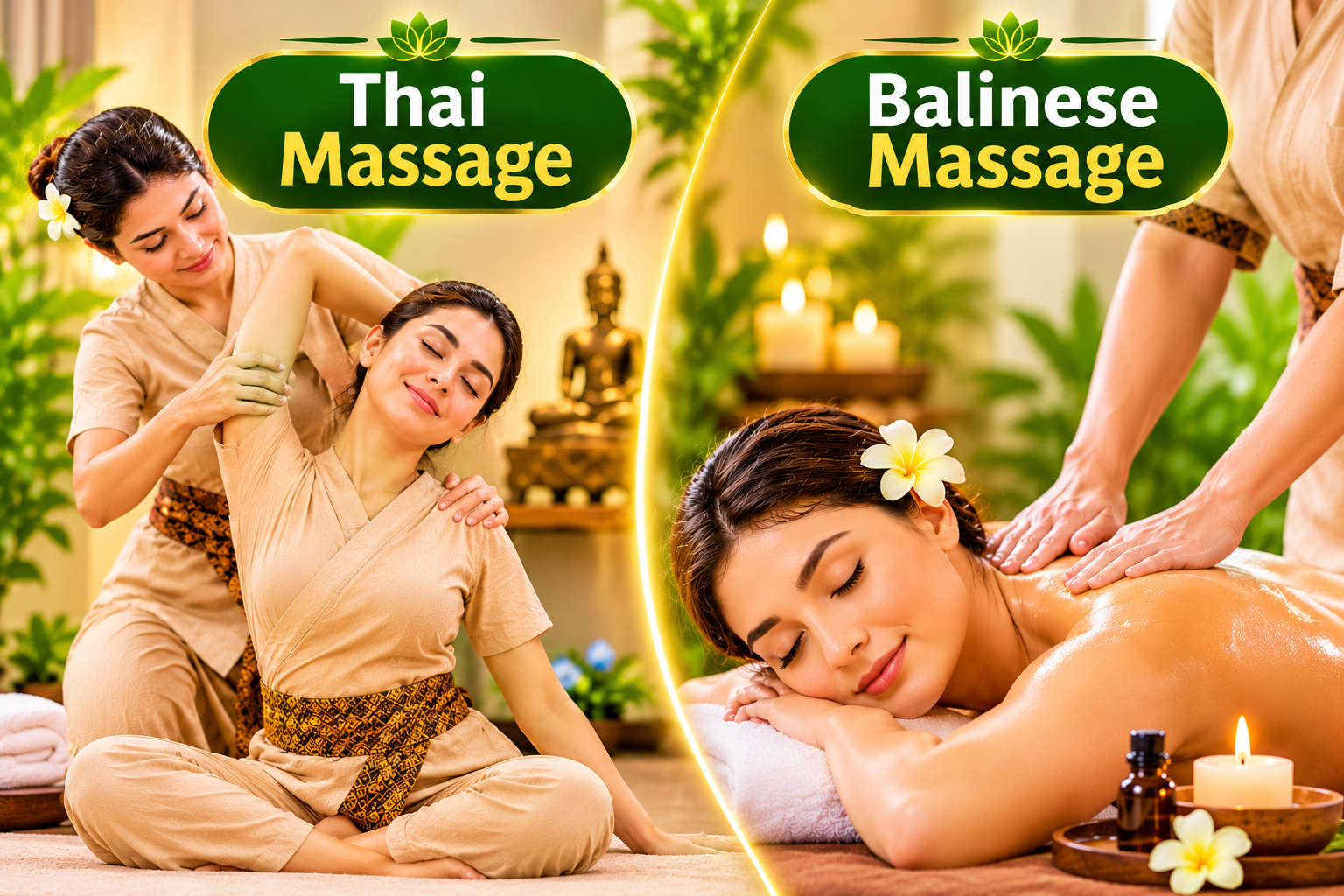
Thai massage is more about movement than rubbing. The therapist leans into rhythmic pressure along your body, guides you through gentle stretches and moves your limbs for you, so you end up in positions you'd never get into on your own. There's acupressure-style pressing in there as well.
People often call it "yoga without the effort", which is fair. You don't do the stretching, the therapist does. It's traditionally done with you in comfortable clothes and without much oil, although every spa has its own way, so ask when you book.
At Swan Spa, Thai massage sessions run for 60 or 90 minutes.
What is Balinese massage?
Balinese massage is the slower, softer-feeling cousin. It pulls together a few techniques in one go: flowing strokes, mild stretches, acupressure, reflexology, some deeper pressure, and aromatherapy running through all of it.
The smell matters here. Herbs, essential oils and a nourishing butter are part of the session, and the areas that aren't being worked on stay covered so you don't get chilly. You mostly just lie there and let it happen, which is exactly the point.
Thai vs Balinese Massage: Key Differences
Here's the Thai massage vs Balinese massage comparison in one place.
| Thai massage | Balinese massage | |
|---|---|---|
| Main idea | Stretching and rhythmic pressure | Flowing pressure, acupressure and aromas |
| Oils | Little to none, traditionally | Essential oils are a big part of it |
| How it feels | Active, like being guided through stretches | Warm, slow, very calming |
| What you do | Get moved and repositioned a lot | Lie still and let go |
| Leaves you | Loose and a bit energised | Relaxed and a bit floaty |
That's the heart of Thai vs Balinese massage: movement on one side, stillness on the other.
Benefits of Thai massage
The big draw is flexibility. If your hips are stiff from sitting, your back feels locked up or your legs are tired from standing all day, the stretching tends to open things up in a way a regular oil massage doesn't.
Swan Spa's page also mentions relief from everyday tightness, better posture and balance, improved circulation, less fatigue and a calmer mind. It works well if you're on your feet or at a desk for long stretches and your body has gone a bit rusty from it. A lot of people walk out feeling lighter and more awake, not sleepy.
Benefits of Balinese massage
This is the one for the "I need a proper break" kind of week. The slow pace, the warmth and the aromas make it easy to stop thinking, and the combination of pressure work and reflexology helps with circulation and that heavy, drained feeling in your muscles.
It's also a good pick if you're someone who gets restless during a massage. There's very little asking you to move or hold a position. You can just stop.
Thai vs Balinese Massage: Which One Should You Choose?
Think about how you want to feel when you walk out of the room. For most people, the Thai vs Balinese massage decision comes down to that.
If you're stiff, sluggish or sitting too much, go Thai. If you're stressed, drained or just need an hour where nobody needs anything from you, go Balinese. Like the idea of stretching? Thai. Love a good-smelling, calm kind of atmosphere? Balinese.
And if neither feels quite right, there are other options. Swedish massage is gentler than both. Deep tissue is better when one particular spot is the problem (we compare it with Swedish in this post). If the scents are what you're after, our aromatherapy massage is worth a look. Everything is listed on the services page, and if you're still choosing a spa, this guide might help.
A word on safety
Whichever side of Thai vs Balinese massage you lean towards, both are fine for most healthy adults, but speak to your doctor first if you have blood clots, take blood thinners, are recovering from surgery, a fracture or an injury, have severe osteoporosis or joint problems, or are pregnant. Thai massage involves stretching, so that last group needs extra care. If you have sensitive skin or allergies to oils or herbs, mention it before a Balinese session.
In general, tell your therapist about anything going on with your body before you start. Massage is a wellness therapy, not medical treatment, so if you have ongoing pain, get it looked at first.
Before your first session
Tell the therapist where you're tight and what you'd rather they avoid. If a stretch or pressure is too much, say so straight away, because it shouldn't hurt sharply. Wear something comfortable, don't turn up straight after a big meal, and drink some water afterwards.
Thai vs Balinese Massage: FAQs
What is the main difference between Thai and Balinese massage? Thai massage is active, with stretching, rhythmic pressure and assisted movement. Balinese massage is slower and more aromatic, with flowing pressure, acupressure and essential oils.
Does Thai massage hurt more than Balinese? It can feel more intense because of the stretching and firm pressure, but it shouldn't be painful. Balinese usually feels slower and softer. Either way, speak up if it's too much.
Which is better for stress in Balinese vs Thai massage? Most people find Balinese more calming thanks to the pace and the aromas. Thai can relieve stress too, but it's a more active session.
Which one is better for stiffness and posture? Usually Thai, because of the stretching. If it's one stubborn knot, deep tissue might do more.
How long do sessions last? Thai massage at Swan Spa is 60 or 90 minutes. For Balinese timings and current prices, please call or WhatsApp us.
How often should I book Thai massage? Every two to four weeks is typical for general wellness. If you sit or stand for very long hours, some people go every one to two weeks.
Can first-timers try Balinese massage? Yes, first-time guests are welcome. Just tell the therapist what pressure feels right.
Where can I get Thai and Balinese massage in Lucknow? At Swan Spa in Gomti Nagar, in private treatment cabins with trained therapists.